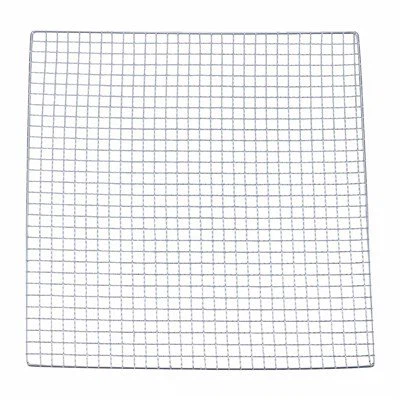
Commercial Stainless Steel Wire Mesh for Industrial Filtration and Screening Equipment
Stainless steel wire mesh functions as the primary filtration, separation, and structural screening media across chemical processing, wastewater treatment, and OEM machinery. Industrial procurement requires precision-woven or welded metal fabrics engineered to maintain exact aperture tolerances under high mechanical tension and corrosive fluid exposure. Fabrication utilizes high-speed looms and automated resistance welders, ensuring uniform pitch distribution and stable open-area ratios. Standard production relies on certified austenitic and low-carbon stainless steel alloys to resist intergranular corrosion and chemical breakdown in demanding operating environments.
-
![Plain Weave Stainless Steel Wire Mesh]() Plain Weave Stainless Steel Wire MeshRobust Structure: The plain weave creates a compact structure with many friction points between wires, resulting in high rigidity and resistance to deformation.. Precise Openings: Openings are
-
![Twill Weave Stainless Steel Wire Mesh]() Twill Weave Stainless Steel Wire MeshMesh Range: Twill weave excels in the medium to ultra-fine range.. Standard Twill: Typically from 20 mesh up to 400 mesh.. Fine Twill: Commonly used in 50 mesh to 250 mesh ranges for precise
-
![Dutch Weave Stainless Steel Wire Mesh]() Dutch Weave Stainless Steel Wire MeshHigh Precision Filtration: The wedge-wire construction captures particles of a specific micron size on the surface, providing surface-type filtration with high accuracy.. Excellent Flow Rate: Despite
-
![Stainless Steel Filter Mesh Discs]() Stainless Steel Filter Mesh DiscsHigh Flow Rate: Large open area percentage ensures minimal pressure drop.. Uniform Filtration: Precise mesh opening guarantees accurate particle retention.. Reusable & Cleanable: Durable structure
-
![Stainless Steel Filter Cylinders]() Stainless Steel Filter Cylinders100% Stainless Steel Construction: Fully cleanable, reusable, and recyclable.. High Mechanical Strength: Withstands high differential pressures without collapsing.. Broad Chemical Compatibility:


Stainless Steel Wire Mesh Types
Plain Weave Stainless Steel Mesh
Construction: Warp and weft wires cross each other in an alternating over-and-under pattern.
Characteristics: Simple and stable structure; provides fixed aperture dimensions; suited for general-purpose screening and sizing.
Mesh Count Range: 2 mesh to 400 mesh.
Twill Weave Stainless Steel Mesh
Construction: Each warp wire passes alternately over and under two weft wires, offset by one thread.
Characteristics: Accommodates heavier wire diameters within finer aperture counts; delivers higher structural load capacity for dense filtration tasks.
Mesh Count Range: 20 mesh to 635 mesh.
Dutch Weave Stainless Steel Mesh
Construction: Thicker warp wires combined with densely packed, touching weft wires.
Characteristics: Creates a tortuous wedge-shaped filtration path; traps sub-micron particles while maintaining high pressure resistance.
Types: Plain Dutch, Twill Dutch, and Reverse Dutch Weave.
Welded Stainless Steel Wire Mesh
Construction: Orthogonal wires intersecting and fused at every joint via automated electrical resistance welding.
Characteristics: Rigid dimensional stability; prevents wire displacement under mechanical vibration; used for structural guards and core support backing.
Materials and Manufacturing Options
Material Grades
AISI 304 / 304L Stainless Steel: Standard industrial grade containing 18 percent chromium and 8 percent nickel; low-carbon variant prevents carbide precipitation during welding.
AISI 316 / 316L Stainless Steel: Marine-grade alloy incorporating 2 percent to 3 percent molybdenum; provides superior resistance to chlorides, sulfuric acid, and chemical pitting.
AISI 310 / 310S Stainless Steel: High-temperature alloy suited for thermal processing and furnace screening up to 1050 degrees Celsius.
Special Alloys: Monel, Inconel, and Titanium grades available for extreme corrosive environments and aerospace filtration.
Edge Finishing and Processing Options
Slit Edges: Precision cut edges bound with metal edging or welded frames to prevent unraveling during handling.
Calendering: Post-weaving roller compression that flattens wire intersections, reducing overall thickness and locking aperture size.
Ultrasonic Cleaning: Removal of residual drawing oils and manufacturing debris to satisfy cleanroom and medical-grade standards.
Stainless Steel Wire Mesh Specifications
|
Specification Parameter |
Industrial and Commercial Range |
Testing Standard |
|
Material Composition |
AISI 304, 304L, 316, 316L, 310S |
ASTM A580 / EN 10088-3 |
|
Mesh Count (Plain/Twill) |
2 mesh to 635 mesh per linear inch |
ISO 9044 / ASTM E2016 |
|
Wire Diameter Range |
0.025 mm to 2.0 mm |
ISO 1611 |
|
Aperture Size |
0.02 mm to 10.0 mm |
ISO 9044 |
|
Roll Width |
0.914 m, 1.0 m, 1.22 m, 1.5 m, Max 2.0 m |
ISO 2768-m |
|
Roll Length |
Standard 30 meters (Custom lengths available) |
Factory Standard |
Applications
Fluid and Gas Filtration
Filter discs, cylinders, and multi-layer filter packs for hydraulic oils, fuel systems, and chemical pipelines.
Water Treatment and Desalination
Intake screening, sand separation filters, and backwash strainer components.
Mining and Aggregate Sizing
Vibrating screen decks and grading panels for mineral processing and particle separation.
Pharmaceutical and Food Processing
Sifter screens, powder classification meshes, and fluid-bed dryer trays.
Raw Material Verification: Incoming wire rods undergo spectrometer chemical composition testing to confirm chromium, nickel, and molybdenum percentages.
Wire Drawing: High-precision carbide dies reduce wire stock to exact target diameters with strict tensile strength control.
Precision Weaving: Computer-controlled weaving looms maintain constant tension across warp and weft wires, preventing pitch distortion.
Annealing: Heat treatment in controlled-atmosphere furnaces relieves internal mechanical stresses and restores uniform crystal structure.
Quality Inspection: Continuous optical scanning monitors aperture dimensions across the entire roll length.

Quality Control and Testing Protocols
Spectrographic Assay
Certified material test reports issued for every production heat lot.
Aperture Optical Projection
Digital profile projectors verify mesh count per inch and average aperture size against ISO standards.
Tensile Strength Testing
Verifies breaking load limits of individual wires and woven fabric sections.
Intergranular Corrosion Testing
Acid immersion testing performed on 304L and 316L grades to confirm weld zone integrity.
Custom Stainless Steel Wire Mesh Solutions
Custom Cut Components
Laser-cut, stamped, or sheared circles, rectangles, and custom-profile filter discs.
Multi-Layer Sintered Panels
Diffusion-bonded multi-layer mesh laminates creating rigid, self-supporting porous filter elements.
Edged and Framed Assemblies
Wire mesh spot-welded or crimped into stainless steel channel frames for easy installation.
Specialized Widths
Non-standard roll widths and short-run custom mesh counts tailored to specific equipment geometry.
How to Choose the Right Stainless Steel Wire Mesh
Match Alloy to Operating Environment:
Select AISI 304 for general water and mild atmospheric use; upgrade to AISI 316 or 316L for chemical exposure, marine conditions, or acidic fluids.
Calculate Filtration Rating:
Determine the maximum allowable particle size (micron rating) to select the correct mesh count and aperture opening.
Select Weave Type by Pressure Load:
Choose plain weave for standard screening; select twill or Dutch weave for high-pressure fluid filtration applications.
Verify Material Certifications:
Request batch-specific mill test reports to confirm alloy authenticity and compliance with international standards.
Packaging and Delivery
Export-Grade Packaging: Wire mesh rolls wrapped in moisture-resistant waterproof paper, enclosed in heavy-duty corrugated tubes, and sealed in wooden crates.
Protection Standards: Prevents edge crushing, surface scratching, and moisture exposure during long-haul ocean freight.
Documentation Support: Complete packing lists, commercial invoices, certificates of origin, and mill test reports provided with every shipment.


FAQ
We're well-known as one of the leading stainless steel wire mesh manufacturers and suppliers in China. With a professional production team, we are able to meet the needs of the majority of our customers. Please rest assured to buy high quality stainless steel wire mesh in stock here from our factory.
filter woven wire mesh, SS302 stainless steel wire mesh, wire mesh filters