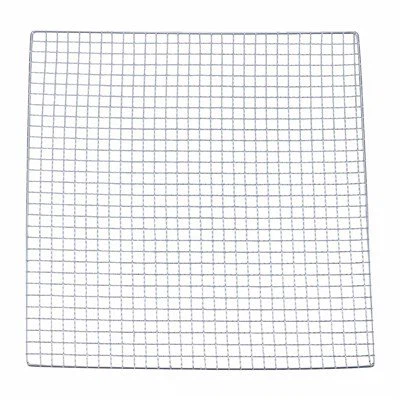
Expanded Metal Mesh for Industrial Guarding, Filtration, and Architectural Facades
Expanded metal mesh is produced by simultaneously slitting and stretching solid metal sheets into rigid, uniform open-diamond patterns. Because the process removes no material, the resulting mesh retains higher structural integrity and strength-to-weight ratio than welded wire or perforated metal plates. Procured primarily by industrial equipment builders, architectural fabricators, and filtration system manufacturers, our expanded metal is supplied in standard raised and secondary flattened profiles across carbon steel, stainless steel, and aluminum alloys.
-
![Carbon Steel Expanded Metal Mesh]() Carbon Steel Expanded Metal MeshHigh Strength-to-Weight Ratio: Excellent load-bearing capacity without the weight of solid sheet metal.. Slip Resistance: The raised, twisted strands create a natural non-slip surface.. Ventilation &
-
![Galvanized Expanded Metal Mesh]() Galvanized Expanded Metal MeshExcellent Corrosion Resistance: The zinc layer protects against rust and oxidation, ensuring a longer lifespan.. Rigid and Strong: The expanded structure provides high strength without the weight of
-
![Stainless Steel Expanded Metal Mesh]() Stainless Steel Expanded Metal MeshHigh Strength: No cross-section loss during expansion; maintains structural integrity.. Lightweight: Less weight than solid sheet metal while maintaining strength.. Anti-Skid: Serrated surfaces
-
![Aluminium Expanded Metal Mesh / Facade Mesh]() Aluminium Expanded Metal Mesh / Facade MeshLightweight: Aluminum is approximately one-third the weight of steel, making it easy to handle, transport, and install, reducing structural load requirements.. Exceptional Corrosion Resistance:
-
![Powder Coated Expanded Metal Mesh]() Powder Coated Expanded Metal MeshExceptional Durability: The cured powder coating is harder and more resistant to chipping, scratching, fading, and wear than liquid paints.. Superior Corrosion & Chemical Resistance: The coating acts
-
![Gothic Expanded Metal Mesh]() Gothic Expanded Metal MeshStructural Integrity: The expanded form creates a strong, one-piece construction that resists warping and distortion.. Lightweight: High strength relative to its weight reduces structural load..
-
![Expanded Metal Lath Mesh]() Expanded Metal Lath MeshStrong Bonding: Diamond-shaped mesh provides excellent key for plaster and stucco.. Lightweight & High Strength: Made from expanded metal, no material loss during stamping.. Corrosion Resistant:


Expanded Metal Mesh Types
Standard Expanded Metal (Raised)
Formed after slitting and stretching, leaving strands set at a uniform angle to the plane of the sheet. Provides maximum rigidity, slip resistance, and directional strength for walkways and safety guards.
Flattened Expanded Metal
Standard expanded metal passed through a cold-rolling mill to reduce the mesh to a flat surface, lowering overall thickness and creating smooth intersections for enclosures and furniture.
Architectural Facade Mesh
Custom heavier-gauge diamond, hexagonal, or linear strand patterns engineered for exterior building cladding, sunshades, and ventilation louvers.
Micro Expanded Metal
Ultra-thin foil mesh featuring microscopic apertures, manufactured for battery current collectors, catalyst supports, and precision electronic shielding.
Materials and Manufacturing Options
Material Grades
Carbon Steel (ASTM A36, Q235B), Stainless Steel (AISI 304, 316L), Aluminum Alloys (1060, 3003-H14, 5052-H32), Copper, and Titanium.
Slitting and Stretching Tolerances
Feed sheet thickness variance controlled within +/- 0.03 mm; SWD and LWD dimensions held to +/- 0.5 mm over standard 2-meter panel lengths.
Surface Finishes
Mill finish, hot-dip galvanized (ASTM A153 / ISO 1461), polyester powder coating, PVDF architectural paint, and electrochemical passivation for stainless steel.
Expanded Metal Specifications
|
Item Code |
Material Grade |
Thickness (mm) |
Strand Width (mm) |
SWD x LWD (mm) |
Sheet Size W x L (mm) |
Weight (kg/m²) |
|
EM-CS-1020 |
Q235B / ASTM A36 |
1.0 |
1.0 |
10 x 20 |
1220 x 2440 |
2.10 |
|
EM-CS-2040 |
Q235B / ASTM A36 |
2.0 |
2.0 |
20 x 40 |
1250 x 2500 |
5.80 |
|
EM-SS-3060 |
AISI 304 |
1.5 |
1.5 |
25 x 50 |
1000 x 2000 |
3.40 |
|
EM-AL-1225 |
Aluminum 3043 |
2.0 |
1.8 |
12 x 25 |
1200 x 2400 |
2.65 |
|
EM-CS-3080 |
Q235B / ASTM A36 |
3.0 |
3.0 |
30 x 80 |
1500 x 3000 |
7.90 |
Note: Custom strand widths, custom feed thicknesses, and specialized coil widths are available upon engineering review.
Applications
Industrial Machinery Guards
Perimeter safety fencing, belt guards, and motor covers preventing operator contact with rotating components.
01
Walkways and Stair Treads
High-traction flooring surfaces for industrial mezzanine decks, offshore platforms, and catwalks.
02
Filtration and Separation
Support cores for liquid filter elements, intake air grilles, and heavy-duty dust collection screens.
03
Architectural Cladding
Exterior sun shading fins, building facade screens, and interior ceiling panels requiring open-area ventilation.
04
Energy Storage
Current collection grids for lead-acid batteries and lithium-ion cell substrate components.
05
Production Equipment: High-tonnage mechanical expanding presses equipped with precision-ground carbide dies ranging from 60-ton to 400-ton capacity.
Feed Stock Control: Raw metal coils and sheets verified upon arrival for gauge thickness uniformity, tensile strength, and elongation compliance via mill test certificates (MTC).
Dimensional Inspection: Post-expansion samples measured using digital optical comparators and vernier gauges to verify strand width, bond integrity, and diagonal pitch accuracy.
Flatness Verification: Leveling roller passes integrated into the production line to ensure sheet camber and bow remain within industrial flatness standards prior to packaging.

Custom Expanded Metal Solutions
Custom Aperture Geometry
Engineering of non-standard diamond, square, round, or decorative slot patterns tailored to specific open-area percentage requirements.
Blanking and Shear Cutting
In-house CNC shearing and laser cutting to deliver panels cut precisely to drawing dimensions, eliminating secondary cutting scrap at the job site.
Edge Conditioning
Deburring and flattened border shearing for panels requiring exposed edges in architectural or consumer-facing installations.
How to Choose the Right Expanded Metal Mesh
Determine Structural Load Requirements
Select thicker strand profiles (3 mm and above) for walkways and heavy security barriers; use thinner gauges (0.5 mm to 1.5 mm) for filtration and enclosures.
Evaluate Open Area vs. Strength
Smaller diamond patterns (SWD under 15 mm) offer higher screening density; larger patterns maximize light transmission and airflow.
Specify Material by Environment
Use hot-dip galvanized carbon steel for general industrial use, AISI 304/316L for chemical or marine exposure, and aluminum for weight-sensitive architectural envelopes.
Choose Raised vs. Flattened
Select raised mesh for maximum slip resistance and structural rigidity; choose flattened mesh when secondary fabrication, bending, or smooth surface contact is required.
Packaging and Delivery
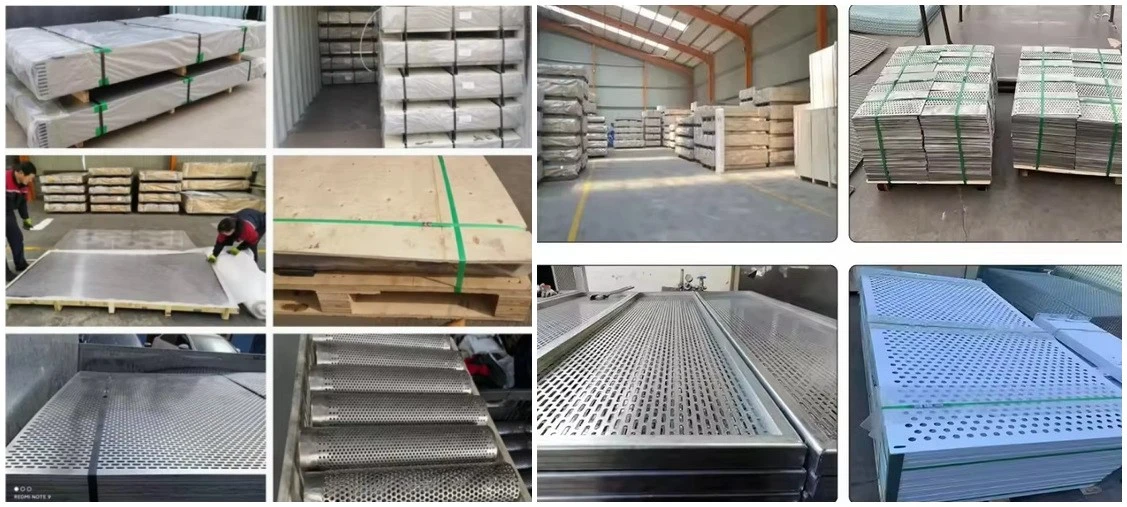
Packaging Method: Expanded metal sheets secured onto heavy-duty fumigation-free wooden pallets, separated by corrugated interleaving paper to prevent surface scratching during transit.
Edge Protection: Steel corner guards and strapping protectors applied to all bundle perimeters; entire skids wrapped in heavy waterproof stretch film.
Shipping Configurations: Standard container loading for 20-foot and 40-foot ocean containers, or custom crate packing for air freight and LTL domestic transport.

FAQ
We're well-known as one of the leading expanded metal mesh manufacturers and suppliers in China. With a professional production team, we are able to meet the needs of the majority of our customers. Please rest assured to buy high quality expanded metal mesh in stock here from our factory.
ceiling expanded metal mesh, hexagonal hole expanded metal mesh, 304 316 316l Stainless Steel Expanded Metal Wire Mesh