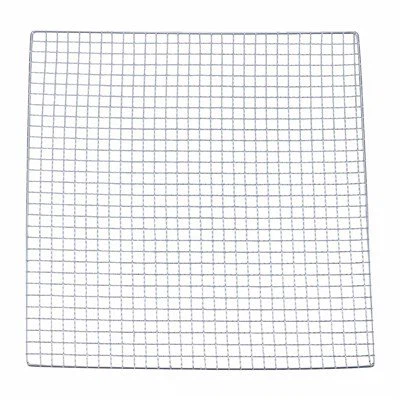
Commercial Decorative Wire Mesh for Architectural Facades and Interior Cladding
Decorative wire mesh functions as an architectural cladding, sunshading, and space-dividing material for commercial buildings and interior spaces. Architectural procurement requires precision-woven or expanded metal panels engineered to maintain rigid flatness and uniform light transmission under dynamic wind loads. Fabrication utilizes high-capacity looms and tension leveling lines, ensuring consistent aperture geometry across large installation spans. Standard production uses corrosion-resistant stainless steel and architectural aluminum alloys, eliminating surface scaling and maintaining aesthetic continuity over long-term outdoor exposure.
-
![Cable Rod Decorative Wire Mesh]() Cable Rod Decorative Wire MeshHigh Strength: The stainless steel wire rope structure offers extremely high tensile strength, suitable for large-span tensioning.. Fireproof & Non-Combustible: Meets A2-level fire protection
-
![Decorative Metal Mesh Curtain (Drapery Mesh)]() Decorative Metal Mesh Curtain (Drapery Mesh)Light Play: Creates captivating patterns of light and shadow (moiré effect) as light passes through or reflects off the metal.. Durability: Resistant to corrosion, rust, and UV damage (Stainless
-
![Crimped Decorative Wire Mesh]() Crimped Decorative Wire MeshExceptional Rigidity: The pre-crimping process creates a self-locking mechanism at each wire intersection, resulting in panels that maintain their shape without additional framing.. Precise Aperture
-
![Spiral Wire Decorative Wire Mesh]() Spiral Wire Decorative Wire MeshSeamless Width Production: Spiral mesh can be manufactured in virtually any width without visible seams or joints, enabling uninterrupted architectural surfaces.. Directional Flexibility: Highly
-
![Laminated Glass Decorative Wire Mesh]() Laminated Glass Decorative Wire MeshDecorative & Aesthetic: Creates unique visual effects, shadows, and light diffusion. Offers a modern, industrial, or classic look depending on the mesh pattern.. Safety & Security: Acts as a
-
![Decorative Bronze Metal Mesh for Furniture & Cabinet Door]() Decorative Bronze Metal Mesh for Furniture & Cabinet DoorAesthetic Elegance: The natural warmth of bronze adds a luxurious, timeless feel to furniture, complementing both traditional and modern designs.. Textural Contrast: Provides a tactile and visual
-
![Architectural Golden Color Decorative Wire Mesh]() Architectural Golden Color Decorative Wire MeshWire Diameter: Ranges from 0.1mm for fine, delicate weaves to 2.0mm+ for heavy-duty, structural applications.. Mesh Opening / Aperture: Highly customizable, from fine 0.6mm openings for semi-privacy
-
![Link Chain Decorative Wire Mesh]() Link Chain Decorative Wire MeshBase Material: High-quality, durable metals suited for both interior and exterior applications.. Aluminum (Alloy): Lightweight, rust-proof, and perfect for large installations or ceilings.. Surface
-
![Metallic Loop Decorative Mesh]() Metallic Loop Decorative MeshMaterial: Stainless Steel, Brass, Copper, Aluminum. Wire Diameter: 0.8mm, 1.2mm. Ring Diameter: 6mm, 10mm. Width: Customizable, usually up to 8 meters seamless width.. Length: Customizable, supplied


Decorative Wire Mesh Types
Architectural Woven Wire Drapery and Mesh
Construction: Interwoven metal wire strands forming flexible or rigid metallic fabrics.
Characteristics: Soft light diffusion; high draping flexibility for interior curtains or rigid flatness for exterior cladding.
Typical Wire Diameters: 1.0 mm to 4.0 mm.
Expanded Metal Architectural Panels
Construction: Uniformly slit and stretched solid metal sheets forming diamond or geometric apertures.
Characteristics: Rigid structural load capacity; high open area for airflow and sun control; zero joint failure points.
Typical Strand Width: 1.2 mm to 3.0 mm.
Crimped Architectural Wire Mesh
Construction: Pre-crimped warp and weft wires locked together at intersections to form rigid square or rectangular grids.
Characteristics: High structural stability; maintains precise aperture spacing under mechanical pressure; used in security partitions and stair railings.
Cable and Rod Metal Mesh Systems
Construction: Combinations of rigid metal rods interwoven with flexible stainless steel wire cables.
Characteristics: High tensile strength spanning large vertical facades; absorbs thermal expansion and wind vibration without buckling.
Materials and Manufacturing Options
Material Grades
AISI 304 Stainless Steel: Standard architectural alloy containing 18 percent chromium and 8 percent nickel; provides reliable rust resistance in normal urban environments.
AISI 316 or 316L Stainless Steel: Marine-grade alloy incorporating 2 percent to 3 percent molybdenum; prevents pitting corrosion in coastal and high-salinity locations.
Architectural Aluminum (Alloy 5052 or 6063): Lightweight structural metal offering high strength-to-weight ratios for large facade systems.
Brass and Copper Alloys: Natural decorative metals that develop a stable protective patina over time for high-end interior applications.
Surface Finishing Treatments
Mechanical Polishing: Directional satin or mirror finish (up to 400 grit) eliminating surface defects and standardizing light reflection.
Electrolytic Polishing: Micro-chemical smoothing process providing enhanced corrosion resistance and a clean metallic luster.
PVDF or Powder Coating: Electrostatically applied polymer coatings available in customized RAL color matching for exterior weather protection.
Decorative Wire Mesh Specifications
|
Specification Parameter |
Industrial and Commercial Range |
Testing Standard |
|
Material Composition |
AISI 304, 316, Aluminum 5052, Brass |
ASTM A240 / ASTM B209 |
|
Wire Diameter Range |
0.5 mm to 6.0 mm |
ISO 1611 |
|
Aperture / Pitch Size |
2 mm to 100 mm (Custom Geometry) |
ISO 9044 |
|
Open Area Percentage |
20 percent to 85 percent |
Architectural Design Standard |
|
Max Panel Dimensions |
Width up to 3.0 meters; Length up to 10.0 meters |
ISO 2768-m |
|
Surface Finish |
Satin, Mirror, PVDF Coating, Anodized |
ASTM A480 / AAMA 2605 |
Applications
Building Exterior Facades
Ventilated metal curtain walls and sun-shading screens reducing solar heat gain on commercial structures.
Parking Garage Ventilation Screens
High open-area mesh panels providing continuous natural airflow and perimeter fall protection.
Interior Partition and Wall Cladding
Decorative ceiling panels, column wraps, and space-dividing screens for corporate offices and hotels.
Staircase and Balcony Railing Infills
Rigid wire mesh infill panels providing structural safety barriers with unobstructed sightlines.
Raw Material Inspection: Incoming wire coils and sheet metals undergo spectrometer testing to verify alloy purity and structural temper.
Precision Weaving and Expansion: Computer-monitored looms and hydraulic expansion presses maintain strict pitch and aperture uniformity.
Tension Leveling and Flattening: Multi-roll mechanical levelers eliminate internal stresses, ensuring panels lie completely flat without warping.
Edge Processing: Custom shearing, laser trimming, and frame welding secure clean perimeter boundaries for easy installation.
Surface Treatment Application: Mechanical brushing, chemical passivation, or electrostatic powder coating applied in controlled-environment lines.

Quality Control and Testing Protocols
Dimensional Inspection
Digital optical measuring systems verify panel length, diagonal squareness, and aperture pitch against shop drawings.
Wind Load Simulation Data
Structural calculations and finite element analysis verify panel performance under extreme wind pressure.
Salt Spray Corrosion Testing
500-hour ASTM B117 testing confirms surface coating adhesion and stainless steel passivation integrity.
Color Consistency Check
Spectrophotometer testing guarantees uniform gloss and color batch matching for architectural coatings.
Custom Decorative Wire Mesh Solutions
Architectural projects demand precise customization to match design intent. Engineering teams work directly with architects and contractors to provide specialized solutions, including:
Custom Panel Framing
Integration of tubular or channel edge frames with pre-drilled fixing holes and mounting brackets.
Radiused and Curved Panels
Factory-formed curved mesh panels designed to fit circular columns and undulating building contours.
Specialized Open Area Ratios
Custom aperture designs balancing visual transparency, acoustic absorption, and sun-shading performance.
Integrated Mounting Hardware
Supply of matching stainless steel tensioners, eyebolts, and structural attachment clips.
How to Choose the Right Decorative Wire Mesh
Define Environmental Exposure
Select AISI 304 for interior or standard outdoor use; upgrade to AISI 316 for coastal or high-pollution urban environments.
Calculate Open Area Requirements
Balance shading efficiency and airflow needs by selecting appropriate aperture sizes and wire thicknesses.
Determine Structural Span
Choose rigid welded or expanded mesh for self-supporting panels; select flexible cable mesh for long vertical suspension spans.
Confirm Finish Compatibility
Ensure surface treatments (PVDF coating or mechanical polish) match architectural specifications and expected design lifespans.
Packaging and Delivery
Export-Grade Protection: Individual panels interleaved with protective foam sheeting to prevent surface scratching during handling.
Crate and Palletization: Enclosed in heavy-duty wooden crates or mounted on reinforced steel support pallets to eliminate bending and edge distortion.
Logistics Support: Global shipping via ocean container or air freight, complete with full packing lists, mill test reports, and certificate of origin documents.


FAQ
We're well-known as one of the leading decorative wire mesh manufacturers and suppliers in China. With a professional production team, we are able to meet the needs of the majority of our customers. Please rest assured to buy high quality decorative wire mesh in stock here from our factory.
Cable Rod Decorative Wire Mesh, aluminium alloy decorative wire mesh, Link Chain Decorative Wire Mesh