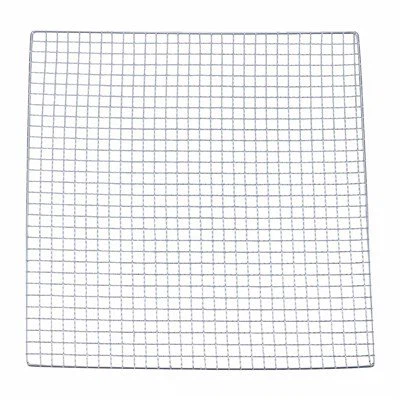
Refractory Hex Mesh and Anchor for High-Temperature Erosion Control and Lining Reinforcement
Refractory hex mesh, widely known as hexsteel, forms a rigid metallic cellular matrix designed to hold and reinforce monolithic refractories, castables, and insulating concretes in high-temperature and high-erosion process equipment. The continuous hexagonal cell structure distributes thermal expansion stress uniformly, prevents refractory lining slumping, and resists mechanical shock and particle abrasion in cyclonic reactors, flue gas ducts, and thermal oxidizers operating up to 1100°C to 1200°C. Fabricated from high-chromium and nickel-chromium stainless steel grades, the mesh provides a dependable mechanical interlock between the structural steel shell and the refractory aggregate.
-
![Refractory Hex Mesh]() Refractory Hex MeshExcellent high-temperature strength. Resists thermal shock and creep. Uniform anchoring for castables and plastics. Easy to cut, bend, and weld on-site
-
![Refractory Anchor]() Refractory AnchorHigh-temperature oxidation resistance. Absorbs thermal expansion stress. Strong mechanical interlock with refractory. Customizable shapes and sizes


Refractory Hex Mesh and Anchor Types
Standard Open Hex Mesh
Unflattened hexagonal cells allowing maximum penetration and bonding of dense refractory castables, with standard cell heights ranging from 20mm to 50mm.
Flattened and Lipped Hex Mesh
Features indented or lipped cell edges designed to enhance physical grip on thin-layer refractory linings and abrasion-resistant concretes.
V-Type and Y-Type Refractory Anchors
Welded directly to the vessel shell prior to mesh installation, providing deep structural ties to anchor the monolithic lining against heavy shear forces.
C-Type and Stud-Type Anchors
Specialized configurations engineered for tight radius bends, modular panel installations, and high-vibration furnace zones.
Materials and Manufacturing Options
Stainless Steel Grades: Available in ASTM A240 and UNS grades including SS304 for standard oxidation resistance up to 870°C, SS310 or SS310S for high-temperature scaling resistance up to 1050°C, SS316 or SS316L for enhanced chemical resistance, and Inconel 601 for extreme thermal cycling environments.
Sheet Thickness: Precision slit and expanded from metal coils ranging from 1.0mm to 3.0mm in thickness to match structural load requirements.
Cell Pitch and Depth: Standard cell openings with a 50mm pitch and depth profiles of 20mm, 25mm, 38mm, and 50mm, with custom geometric apertures available upon engineering request.
Surface Condition: Mill finish, degreased, and entirely free of rolling oils to ensure optimal on-site weldability without carbon contamination.
Refractory Hex Mesh and Anchor Specifications
|
Product Component |
Material Specification |
Thickness or Diameter |
Standard Dimensions or Height |
Primary Operating Limit |
|
Hex Mesh Standard |
SS304, SS310, SS316 |
1.2mm to 2.5mm |
Sheet 1m x 3m |
Depth 20mm to 50mm |
|
V-Type and Y-Type Anchor |
SS304, SS310, 253MA |
Diameter 6mm to 12mm |
Length 50mm to 300mm |
Matching shell metallurgy |
|
Hex Mesh Heavy Duty |
SS310S, Inconel 601 |
2.0mm to 3.0mm |
Sheet 1m x 2m |
Depth 38mm to 50mm |
|
Stud Welded Anchor |
Carbon Steel, Stainless Steel |
Diameter 8mm to 16mm |
Threaded or plain end |
Direct arc stud welding |
Petrochemical and Refining: Fluid catalytic cracking units, regenerators, reactor transfer lines, cyclones, and slide valve housings.
Power Generation: Boiler furnace walls, cyclone burners, flue gas desulfurization ducts, and coal gasification vessels.
Cement and Metallurgy: Rotary kiln calciner zones, tertiary air ducts, sinter plant cooling zones, and high-temperature exhaust stacks.
Process Engineering: Thermal oxidizers, waste-to-energy incinerator chambers, and fluid bed reactor linings.

Manufacturing and Quality Control
Mechanical Punching and Expansion: High-tonnage mechanical presses slit and expand stainless steel coils into precise, uniform hexagonal matrices without micro-fracturing the grain structure.
Dimensional Inspection: One hundred percent verification of cell depth, sheet squareness, pitch accuracy, and flatness using digital gauges prior to bundling.
Weldability and Bend Testing: Regular sample testing of mesh flexibility and node tensile strength to ensure easy on-site contouring to complex vessel radii.
Material Traceability: Positive Material Identification testing conducted on raw stainless steel coils to verify exact chemical composition including chromium, nickel, and molybdenum content against mill test certificates.
Custom Refractory Solutions
Radius Pre-Forming
Factory pre-rolling or pre-bending of hex mesh sheets to match exact internal vessel diameters such as cyclone barrels and transfer elbows, significantly reducing on-site installation time.
Custom Anchor Integration
Tailored anchor leg configurations, welded spacer bars, and pre-welded anchor-to-mesh assemblies engineered according to project drawings.
Special Alloy Sourcing
Procurement and fabrication of non-standard high-nickel alloys for severe sulfur, chlorine, or high-temperature reducing atmospheres.
How to Choose the Right Refractory Hex Mesh and Anchor
Evaluate Operating Temperature
Select SS304 for operating temperatures below 750°C, and specify SS310 or high-nickel alloys for continuous service above 900°C to prevent high-temperature scaling and creep.
Determine Lining Thickness
Match mesh depth, such as 25mm or 38mm, directly to the specified refractory castable thickness, ensuring adequate structural cover over the metal cells.
Assess Abrasion and Thermal Cycling
High-velocity particulate flow requires heavier gauge strip steel of 2.0mm and above alongside denser anchor spacing to prevent localized lining shear.
Verify Shell Compatibility
Ensure anchor material metallurgy matches the carbon steel or alloy steel vessel shell to guarantee sound structural welding during installation.
Packaging and Delivery
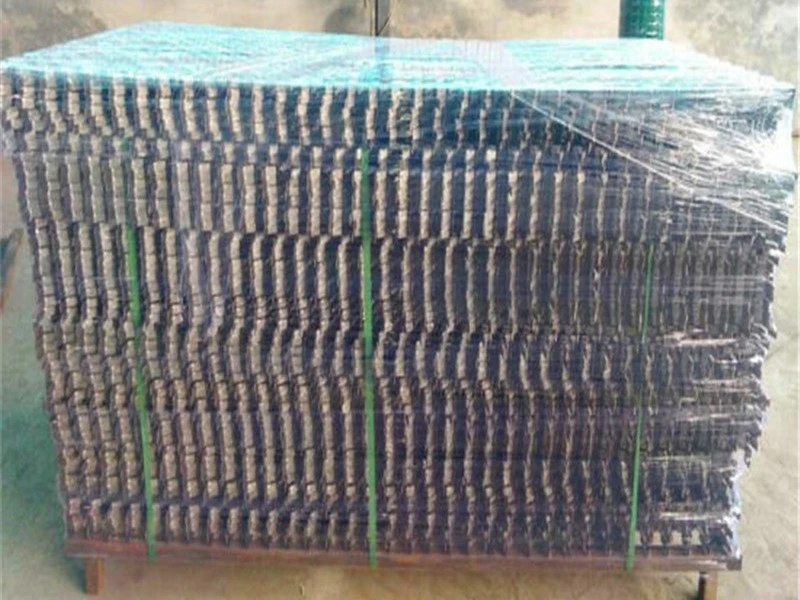
Palletization: Flat-packed sheets stacked securely on heavy-duty fumigation-free wooden pallets or steel skids, strapped and edge-protected to prevent transit distortion.
Corrosion Protection: Interleaving moisture-resistant barrier film and edge guards for secure ocean-freight shipping to international project sites.
Logistics Documentation: Complete export documentation package provided, including Commercial Invoice, Packing List, Certificate of Origin, and Mill Test Certificates to EN 10204 3.1.

FAQ
We're well-known as one of the leading refractory hex mesh and anchor manufacturers and suppliers in China. With a professional production team, we are able to meet the needs of the majority of our customers. Please rest assured to buy high quality refractory hex mesh and anchor in stock here from our factory.
High Temperature Hexsteel Metal, Woven Copper Wire Mesh, High Manganese Crimped Wire Mesh